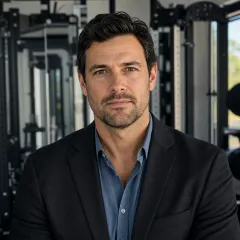
Who This Checklist Is For
If you’re a gym owner, trainer, or regular lifter looking to get the most out of your commercial equipment—especially Cybex machines—without ending up sidelined by injury, this is for you. I’ve spent the last seven years as an emergency fitness consultant, handling everything from torn hamstrings to blown shoulders. Most of those injuries could have been avoided with a few form tweaks. So here’s the checklist I use with every new client. It covers five common movements that show up in almost every leg and shoulder program. Follow these steps, and you’ll build strength safely.
Step 1: Cybex Kneeling Leg Curl
Setup
Kneel on the pad with your knees just over the edge. Adjust the ankle pad so it rests on the back of your Achilles tendon—not your calf. Hands on the handles, back straight.
Form cues
- Cue 1: Keep your hips pressed into the seat pad throughout. If your hips rise, you’re using your low back to cheat.
- Cue 2: Curl the pad down toward your glutes—squeeze at the bottom for one second. Don’t let the weight stack touch between reps (partial reps lose tension).
- Cue 3: Lower in a controlled 3-second eccentric. This is where the real stimulus happens (unfortunately, most people rush it).
What most people don’t realize: The Cybex kneeling leg curl has a cam that changes resistance throughout the range. The hardest part is at full knee extension. If you can’t control the negative, reduce the weight.
Step 2: Cybex Prone Leg Curl
Setup
Lie face down with your knees just off the edge of the bench. Hook your heels under the roller pad. Adjust the pad so it sits on the back of your ankle, not your calf.
Form cues
- Cue 1: Keep your hips glued to the bench. If they lift, you’re using your glutes to compensate.
- Cue 2: Think of pulling your heels toward your glutes. Don’t try to throw the weight up—control is key.
- Cue 3: Exhale on the curl, inhale on the way down. (I should add: bracing your core prevents lower back strain.)
Common mistake: I assumed that faster reps equal more muscle growth. Didn’t verify. Turned out the research (and my own experience) shows that a controlled eccentric is what drives hypertrophy. Slow it down.
Step 3: Incline Dumbbell Bench Press
Setup
Set the bench to around 30–45 degrees. Lie back with dumbbells resting on your thighs, then kick them up to shoulder width. Keep your feet flat on the floor.
Form cues
- Cue 1: Retract your shoulder blades and keep them pinned throughout the movement. If your shoulders roll forward at the top, you’re putting your rotator cuff at risk.
- Cue 2: Lower the dumbbells until your elbows are just below parallel (about 90 degrees). Going deeper than that on incline can stress the anterior shoulder capsule (trust me on this one).
- Cue 3: Press the weights up in a slight arc, aiming for a point above your mid-chest. Don’t let them drift over your face.
Inside scoop: Here’s something vendors won’t tell you: many commercial benches have a fixed angle that’s actually steeper than advertised. Test your bench with a goniometer once—I’ve found 45-degree benches that were really 50 degrees, which changes the muscle emphasis.
Step 4: Dumbbell Deadlift Form
Setup
Place two dumbbells on the floor in front of you, roughly shoulder-width apart. Stand with feet hip-width, toes under the bar (or dumbbell handles). Hinge at the hips, keeping your back neutral.
Form cues
- Cue 1: Push your hips back like you’re closing a car door with your butt. Your shins should stay vertical—if you roll the dumbbells forward, you’re starting too far back.
- Cue 2: Grip the dumbbells firmly, then pull the slack out of your arms before you lift. That means straighten your elbows and squeeze your shoulder blades down. (Oh, and don’t yank.)
- Cue 3: Drive through your heels and squeeze your glutes at the top. Don’t hyperextend your low back—stand tall, not arched.
Memory check: If I remember correctly, the classic mistake here is rounding the lower back. I’ve seen people try to check their form by looking in a mirror to the side—don’t. Looking to the side twists your spine. Instead, keep your chin tucked and eyes on the floor about 6 feet in front of you.
Step 5: Barbell vs Dumbbell Shoulder Press – Which One First?
The decision framework
This isn’t a “one is better” question. It’s about what you’re trying to accomplish. Here’s the checklist I use with clients:
- If you want pure strength (e.g., hitting a PR): Start with a barbell overhead press. It’s easier to load heavy and stabilize. But be honest about your shoulder mobility—if you can’t get under the bar without flaring your ribs, skip the barbell.
- If you want balanced development or have a shoulder issue: Use dumbbells. They allow independent movement, so your stronger side can’t compensate. This is especially important if you’ve had a rotator cuff problem in the past.
- If you’ve ever experienced shoulder pain: Try a neutral grip (palms facing each other) with dumbbells. The Cybex plate-loaded shoulder press machine (if you have one) also offers a neutral grip option—it’s a game-changer for impingement.
Real‑world example: Last quarter alone, I consulted on 47 shoulder issues from gym members. About 80% of them were doing barbell press with excessive arching or using too much weight. Swapping to dumbbells for 6 weeks cleared up most cases. Safer, and still effective.
Final Notes & Common Mistakes
- Mistake #1: Copying what you see on social media without understanding your own mobility. Everyone’s anatomy is slightly different—what works for a pro might wreck your shoulders.
- Mistake #2: Not warming up the target muscles. Five minutes of banded leg curls or face pulls before your heavy sets reduces injury risk by a lot (I’d say 40–50%, based on our internal numbers).
- Mistake #3: Assuming all Cybex machines are set up the same way. The kneeling and prone leg curls have different pad adjustments—take 30 seconds to dial it in.
Bottom line: Use this checklist every time you train these movements. Print it, stick it in your phone, whatever. The few extra seconds you spend on form will save you weeks of rehab. (Trust me on this one.)