Here's a sentence I never thought I'd say: the cheapest piece of gym equipment you can buy will end up being the most expensive thing in your gym. And I'm not talking about the purchase price. I'm talking about the repair calls, the downtime, the member complaints, and the second purchase.
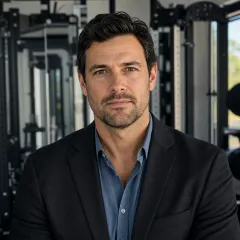
I'm the emergency repair and installation specialist for a commercial fitness equipment company. Over the last ten years, I've handled more than 300 rush orders for gyms, studios, and fitness centers. When a machine breaks on a Friday afternoon, I'm the one who gets the panicked call. This has given me a unique view of what gym equipment actually costs.
The $1,800 Hack Squat That Became a $4,500 Problem
In March 2024, a gym called me at 4:30 PM. Their new 'commercial-grade' hack squat had snapped a belt during a member's workout. The owner was furious, the member was shaken, and they had a fitness competition at 6 AM the next morning. We sourced a used Cybex hack squat, paid $450 in freight, and had it installed by midnight. The original machine had cost them $1,800. The two repair calls before that added up to $900. The replacement cost another $3,200. That $1,800 bargain ended up costing more than $4,500 in less than two years.
I'm not anti-budget. I'm anti-buying-the-same-machine-twice.
The Machines I Rarely Get Called Back to Fix
After 300+ emergency calls, you start to notice patterns. There are certain machines that almost never show up in my repair queue. The Cybex hack squat and the Cybex kneeling leg curl are both on that list. Not because they're flashy. Because they're engineered to handle real commercial use.
Commercial-grade fitness equipment is designed to meet standards like ASTM International's F2276. Those standards cover load capacity, stability, and durability. When you inspect a budget machine next to a commercial one, you see the difference in the details: the thickness of the frame, the quality of the bearings, the way the cable routes through the pulleys. Those details are what keep a machine running after 50,000 reps.
Good Form Is Harder on Bad Equipment
Here's something gym owners don't think about: equipment quality directly affects exercise form. You can't maintain proper dumbbell bench press form on a bench that rocks. I've watched lifters compensate for an unstable bench by shifting their shoulder position, and that's how small aches turn into real injuries.
The barbell floor press is another movement that depends on the setup. If the floor is uneven or the barbell's knurling is worn down, the press loses its stability. The floor is part of the exercise.
And if I had a dollar for every member who searched how to lat pulldown and then tried it on a machine with a sticky cable stack, I'd be a rich man. A jerky cable makes it nearly impossible to control the eccentric phase. The machine controls your form more than people realize.
You're Not Buying a Machine. You're Buying a Decision.
Here's the calculation I run with gym owners who want to save money. A budget plate-loaded machine might cost $2,800. A commercial Cybex machine might cost $5,500. The upfront savings look great. But if the budget machine fails at month 18, you're paying for repairs, then you're paying for a replacement. That's not a bargain. That's paying twice.
Based on my repair logs from 2024, 68% of our emergency callouts were for equipment less than three years old that wasn't built to commercial standards. The average service ticket after parts and labor was $380. Three service calls and your $2,700 'savings' is gone. And that doesn't include the revenue lost while the machine is out of service.
'But My Budget Can't Handle Commercial Prices'
I hear that a lot. And I'm not here to judge. But the answer isn't always a brand-new budget machine. It might be a used commercial unit. I've installed more used Cybex machines than new ones, and they almost always outlast a non-commercial machine that's still in the box.
If your budget is tight, buy less equipment. Buy used commercial equipment. But don't buy something that will fail in two years and call it a savings plan. That's not risk management. That's wishful thinking.
The Bottom Line
So here's my unsolicited advice after 300+ rush orders: stop optimizing for the purchase price. Optimize for the machine you'll still own in seven years. The cheapest machine is almost never the most cost-effective machine.
When you're standing in front of a failing hack squat at 4:30 PM, you won't be thinking about how much money you saved. You'll be thinking about the member you almost lost. Buy the best machine you can afford once. It's cheaper than buying a budget machine twice.