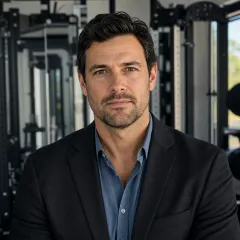
Opening a gym in 2019 felt like the ultimate leap of faith. I had the business plan, the lease on a 4,000-square-foot space, and the conviction that my community needed a no-frills strength and conditioning spot. The only problem was the budget. After paying rent and insurance, the equipment line looked depressingly thin. So I did what many first-time gym owners do: I went hunting for "good deals" on used and lower-tier equipment. That decision nearly sank me.
The Setup: Diving Headfirst into the "Deal"
The plan was simple. I needed a mix of strength training machines, free weights, and cardio equipment to serve a general membership crowd. I found a guy selling off equipment from a gym that closed down, and I thought I hit the jackpot. I snagged a leg press machine gym owners were practically giving away, an older hack squat, a handful of dumbbells, and a consumer-grade treadmill that was supposedly "good enough for a side hero".
The total came to around $4,000—or rather, $4,700 with the truck rental and gas to haul everything across town. Still, in my head, I was saving $10,000. I remember telling my wife, "It's all steel. What's the worst that can happen?" Oh, I was so naive.
First Cracks: The Treadmill Truth
Our first real member signed up in January 2020, and the whole point for them was how to lose weight on a treadmill. They wanted to do intervals three days a week. The guy had a solid 40 pounds to lose, and I was rooting for him. For the first week, it was great. Then the motor started that smell—that hot, electrical burning smell. By day nine, the belt seized mid-sprint. The display just flashed a generic error code "Err 2".
We checked it, swapped the belt, and it limped along for a month. Then it locked up again. The technician said the motor controller was fried due to overheating. "Consumer units," he said, "they rate the motor for a duty cycle of about 30 minutes. After that, the thermal overload trips. It's not designed for a gym where people are running for 40 minutes straight." That was my first lesson in duty cycles—the hidden spec nobody talks about when claiming a machine is 'gym-grade'.
Replacing it cost $1,200. That "cheap" treadmill ended up costing more than a commercial one, and it still didn't work. The kicker? The member I was rooting for ended up leaving because the treadmill kept breaking. He lost his momentum. I lost a membership. That stung more than the cash.
The Death Spiral: Strength Machines Falling Apart
But the treadmill was just the appetizer. The leg press machine gym workhorse, the one I'd bragged about hauling back, began leaking hydraulic fluid from its adjusting seat mechanism. It stained the floor, smelled terrible, and made the movements feel unstable. One day, a member's rep bottomed out hard because the seat popped backwards. They didn't get hurt, but it scared them enough to avoid the leg press entirely.
And the hack squat? The linear bearings wore out, creating a noticeable wobble. A wobbly squat machine is terrifying for users. It creaked and groaned so loudly you could hear it over the music.
My phone was a constant source of anxiety. "Hey, the machine you fixed yesterday is making the noise again." It was an endless cycle of diagnostics, replacement parts, and apologies. I was burning through my cash reserves on fixes and my mental reserves on stress.
Let me break down the real cost of that cheap equipment for you: $4,000 purchase price + $880 in repairs + $1,200 in lost revenue from membership cancellations and temporary holds = $6,080 wasted. I only believed my dad's advice to "buy quality memory, buy once" after ignoring it and eating that loss. And to be fair, it wasn't just the money. It was the embarrassment of running a facility with equipment that was actively embarrassing the brand.
The Pivot: Going Commercial with Cybex
By mid-2021, I had two choices: close the doors or remortgage the house to fund a real equipment overhaul. I chose the latter, and I over-indexed on Cybex as the core of my strength and cardio lineup. I remember unboxing the first Cybex Eagle Chest Press. It was love at first push.
The feel was completely different. The converging chest press motion aligned with the natural arc of the arms—no more weird joint strains. The resistance curve was incredibly smooth. I watched members set up on it without asking for help, just because the ergonomics were intuitive.
I also pulled the trigger on the Cybex hack squat machine weight stack. The weight increments were user-friendly, the plate loading was easy, and the cam-guided movement kept tension perfect throughout the whole range of motion. Members who had avoided the hack squat because of my clunky old equipment started fighting over time on this one. It became the most popular machine on the floor.
For cardio, I replaced the consumer garbage with commercial Cybex treadmills. The difference isn't just power—it's the cooling system, the easy-to-clean running belt, and the precise speed/incline controls. Members looking to lose weight on a treadmill need consistency. They need to hit 30 minutes without the machine shutting down. Cybex delivers that reliability.
The Insider Perspective on "Commercial Grade"
What most people don't realize is that 'commercial grade' isn't just a fancy slogan for a higher price tag. It represents a different engineering philosophy. In my experience, it often comes down to tolerances. Commercial strength machines use heavier gauge steel and better welds because they're engineered to handle millions of reps and high-impact drops. Consumer options are engineered for a single home user at 80kg, not a 120kg rugby player doing drop sets.
I've never fully understood the exact pricing logic on replacement parts for cheap machines. The premiums and the inconsistencies vary so wildly that I suspect it's more art than science—but that's a whole other rant. What I know for sure is that with Cybex, the parts are in stock, the tech support actually answers, and I haven't had to fix anything in the two years since.
The Recovered Total: A Lesson in Value, Not Price
So, what's the real punchline here? The point isn't that Cybex is the only brand on the market you should consider. My point is that the concept of "value over price" is the only way to survive in this industry. When you sign a gym lease, you're taking on a long-term obligation to your members. Buying equipment is the last place to try and save a few thousand dollars.
I calculated my total cost of ownership (TCO) for the Cybex strength line versus the cheap stuff. The Cybex machines have an expected lifespan of 10-15 years under heavy commercial use, with minimal maintenance. The cheap machines lasted about 18 months. That math completely flipped my perspective.
I can only speak to my specific context of a mid-size, high-traffic strength gym. If you're a business center hotel gym with a single treadmill and light usage, you might get away with a lighter-grade treadmill. Your mileage may vary if you're dealing with a completely different scenario. But if you're chasing serious fitness enthusiasts or running a busy facility, please learn from my story.
Check your specs. Look for CYBEX on the silver label. Verify the warranty coverage on the brakes and the structure. Don't just look at the sticker price—look at the cost to keep your doors open and your members moving.
They warned me about the costs of running a gym. I didn't listen. A $5,000 'savings' turned into a $6,000 loss, a splintered reputation, and a heck of a lot of gray hair. The Cybex equipment wasn't the most expensive option I could have bought, but it was the best value I ever paid for.